WOHNBAU
This concept project redesigns the damage reporting experience for the WOHNBAU tenant portal, a public housing company in Berlin, to make the process clear, efficient, and user-friendly. The goal was to help tenants report issues in their apartments quickly and accurately, while reducing friction and unnecessary back-and-forth for property management teams.
Context & Challenge
Reporting damages in rental apartments is a frequent but often frustrating task for tenants. Many existing tenant portals rely on long forms, unclear terminology, or unstructured text inputs, making it difficult to report issues accurately. As a result, important details are often missing, reports are miscategorized, and additional follow-up between tenants and property management or repair companies is required.
For WOHNBAU, a conceptual public housing company based in Berlin, the challenge was to rethink the damage reporting flow so it works for a broad and diverse tenant base with varying levels of digital confidence. Tenants needed clear, step-by-step guidance to identify where a problem occurred, what type of issue it was, and which details were relevant — without feeling overwhelmed or uncertain.
At the same time, the concept needed to support operational efficiency on the management side by ensuring reports are structured, complete, and easy to process. The core challenge was to balance a simple, accessible experience for tenants with the need for accurate, well-categorized information for property management teams.
User Research
User research was conducted to understand how tenants across different landlords currently report damages, how communication typically takes place, where confusion occurs, and which information is most important for both tenants and the personnel responsible for repairs. The goal was to design a reporting experience that feels simple, guided, and reliable, while still capturing all necessary details.
Methods
Qualitative interviews were conducted with tenants to understand their previous experiences with damage reporting, including pain points, expectations, and ideas for improving the overall experience.
Additional interviews with repair personnel focused on common reporting issues and inefficiencies caused by incomplete or incorrectly submitted damage reports.
Different types of damages were identified during interviews with repair personnel, and a card sorting study with tenants was conducted to understand how they naturally group and describe these issues. This directly informed the structure and wording of the damage categories.
Findings
Tenants often reported difficulties when reporting damages by phone, including long waiting times that could exceed an hour. Those who used online portals or apps described challenges navigating large, unstructured lists of damage types. In some cases, tenants were only asked to provide a free-text description and were unsure whether the information they entered was sufficient. This lack of guidance increased cognitive load and frequently led to frustration, uncertainty, or abandonment of the reporting process.
From the perspective of repair personnel, missing details and miscategorized damage reports were identified as major issues. In some cases, technicians had to visit an apartment only to discover that a different problem was present than originally reported. This led to unnecessary site visits, delays, and frustration on the repair side.
User Flow
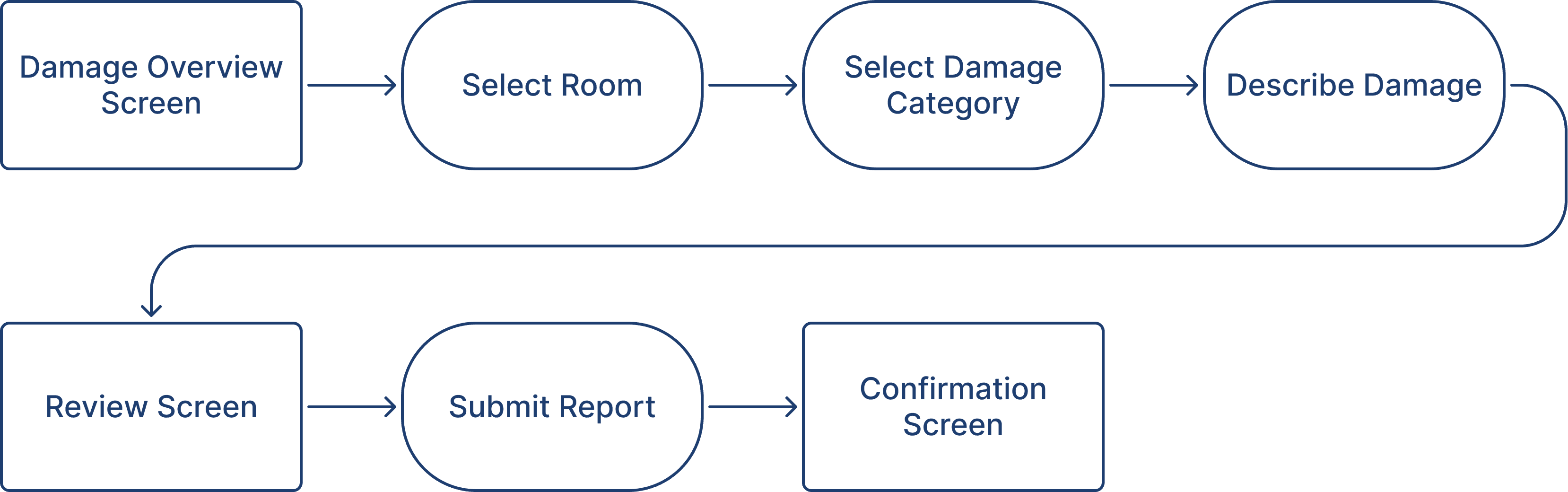
The user flow was designed to reduce friction and guide tenants through the damage reporting process in a clear, step-by-step manner. Instead of presenting a single long form, the experience breaks the task into small, manageable decisions that help users stay oriented and confident. This wizard-style approach prevents users from feeling overwhelmed, as long forms often appear daunting and can cause users to overestimate the effort required.
The flow begins by identifying where the damage occurred and selecting the specific room, establishing clear context from the start. Users then choose the type of damage relevant to that room through structured categories, which minimizes uncertainty and reduces incorrect submissions.
In the next step, users select the exact issue and can optionally add additional details and upload photos. This allows them to describe the problem in their own words while supporting it visually, ensuring repair personnel receive all necessary information without overburdening the user.
Before submission, users reach a summary screen that clearly displays all entered information, giving them the opportunity to review and edit details if needed. After submission, a confirmation screen reassures users that the report has been successfully sent and explains the next steps, reinforcing trust and transparency.
Solution
The designed solution translates research insights into a clear, step-by-step damage reporting experience that reduces cognitive load and guides users with confidence. A potentially stressful task is broken down into simple, manageable decisions, while transparency and a sense of control are maintained throughout the process.
Each screen focuses on a single user decision, supported by clear language and visual cues. This structured approach enables tenants to report damages efficiently without feeling overwhelmed, while ensuring that all relevant information is captured accurately for effective follow-up and resolution.
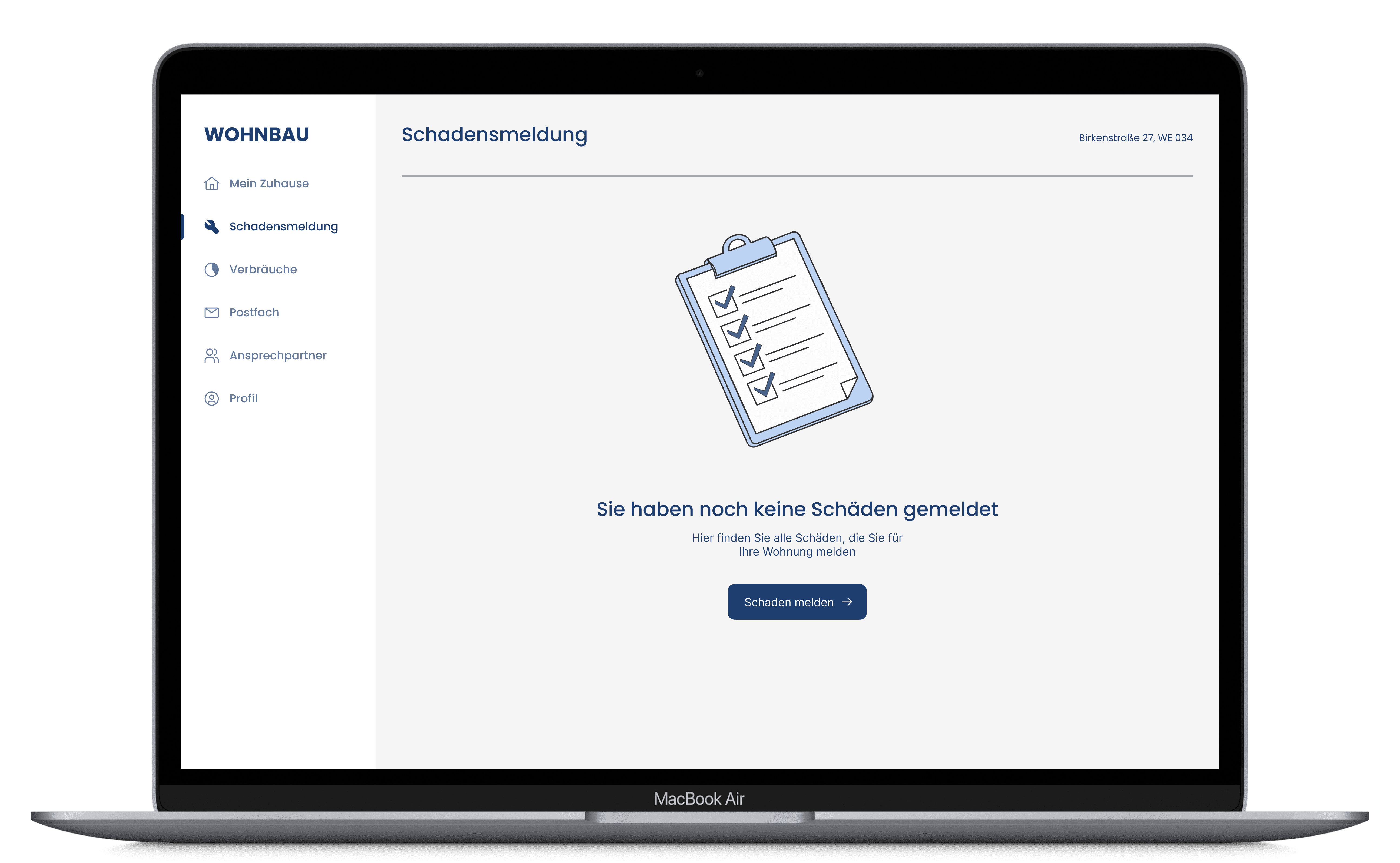
Overview & Entry Point
Introduces the damage reporting feature and clearly communicates the current state. An empty state explains the purpose of the section and provides a single, prominent call-to-action to start a new report.
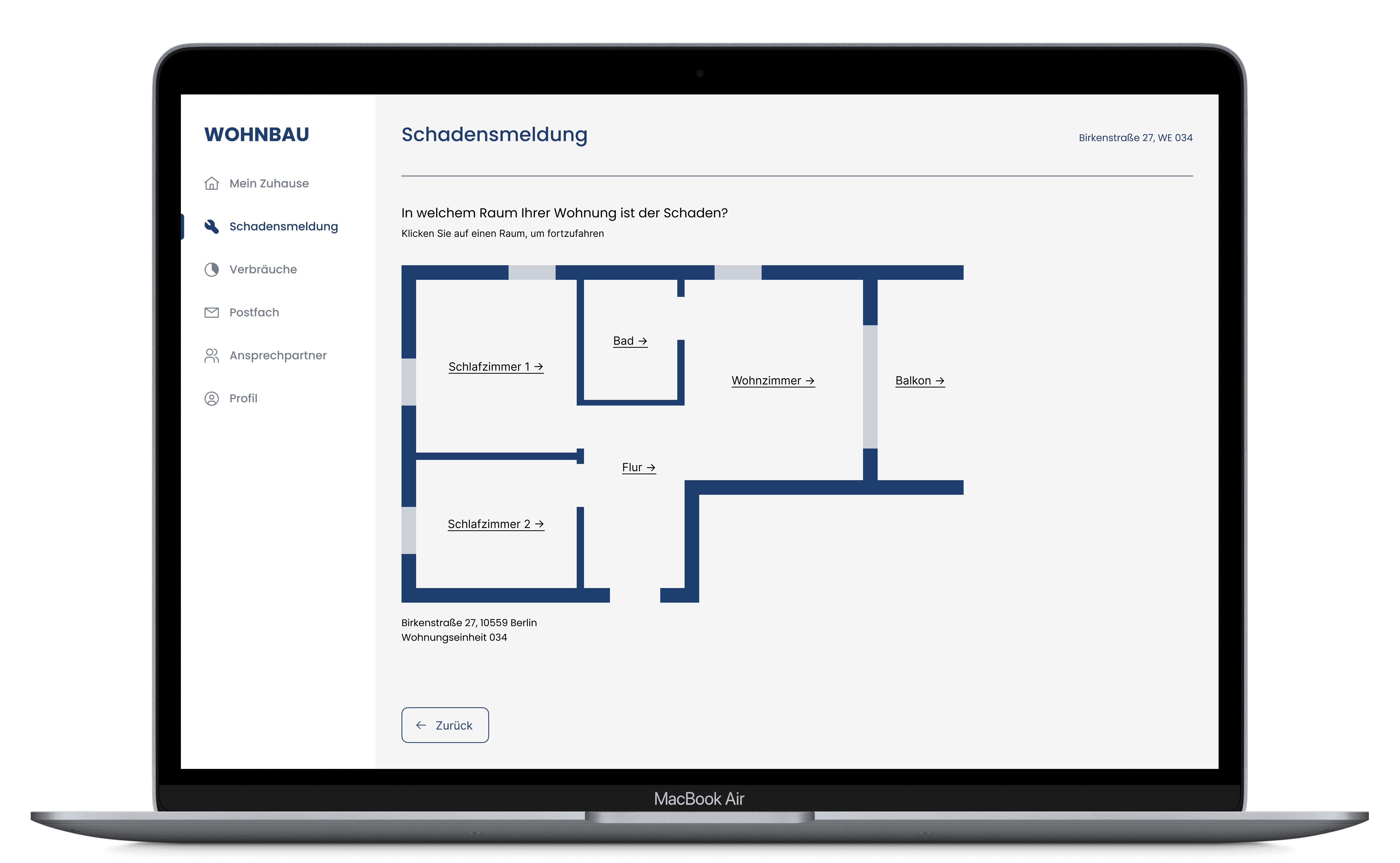
Room Selection
Allows users to select the room where the damage occurred using a visual floor plan. Direct interaction enables fast selection and helps users orient themselves without reading complex forms.
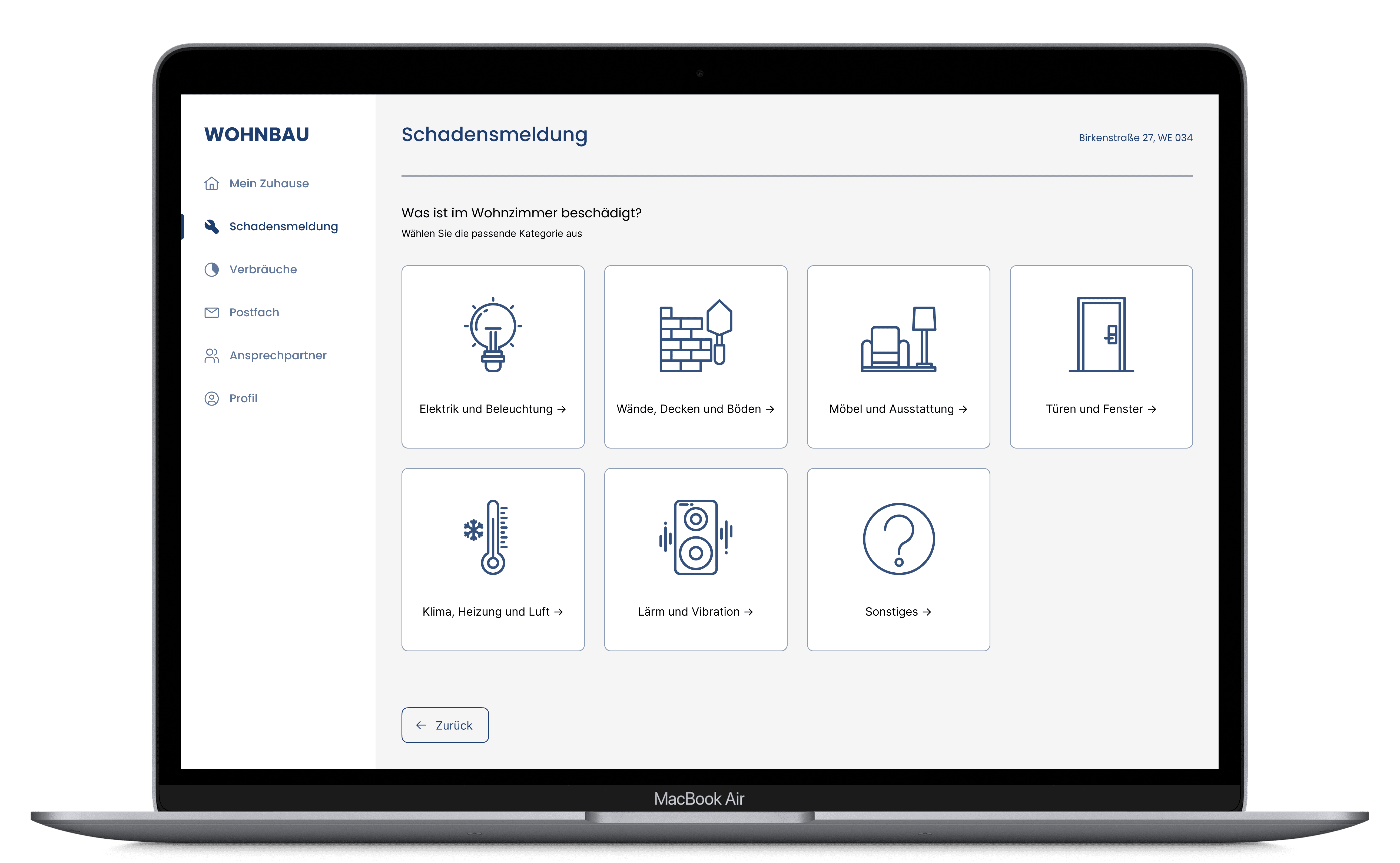
Damage Category Selection
Presents clearly structured, research-based damage categories. This step helps narrow down the issue and prepares the system for more targeted follow-up questions.
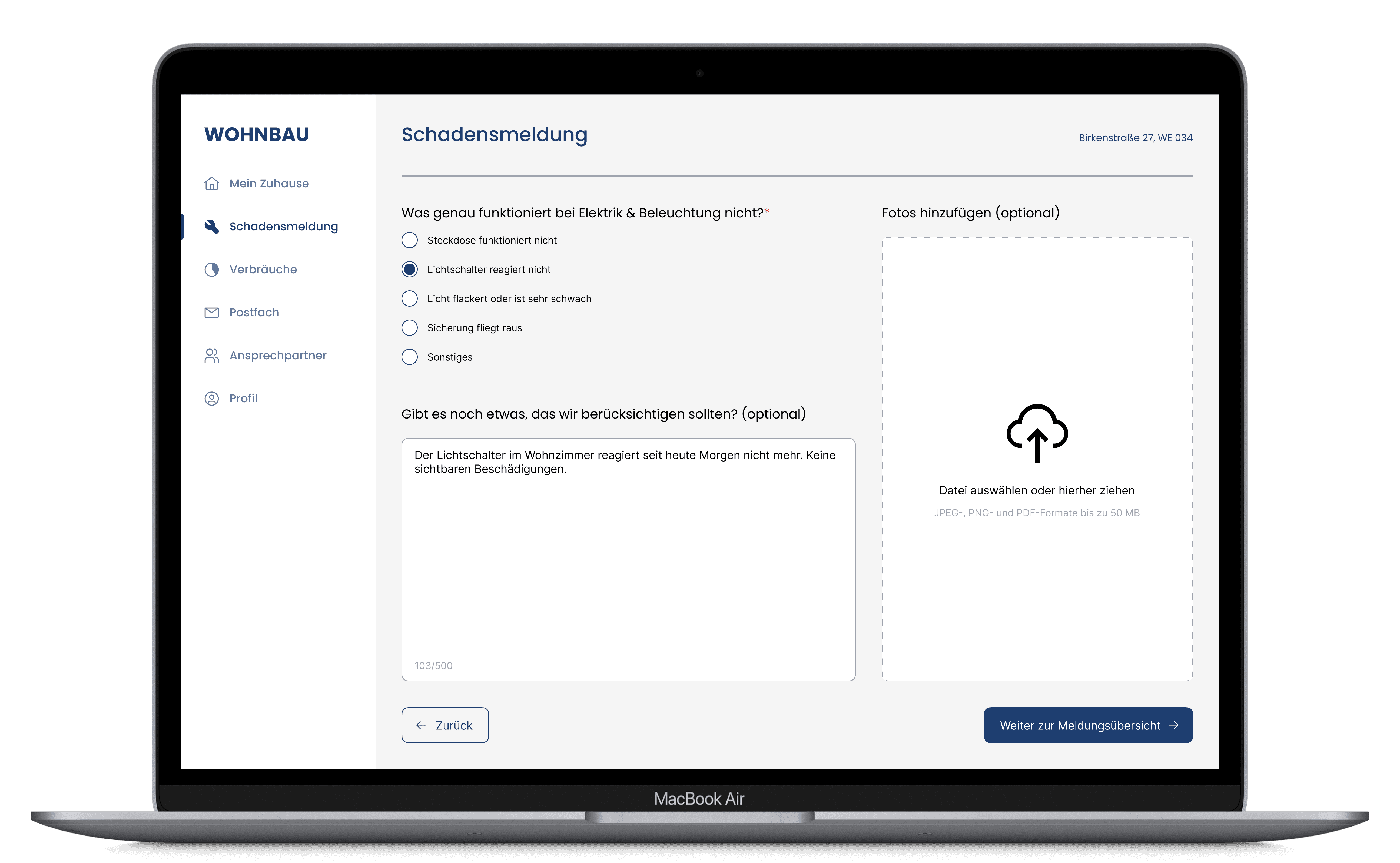
Damage Details
Guides users through specifying the exact issue based on their previous selection, with optional comments and photo uploads. Clear layout and language make it easy to provide precise information while keeping the process lightweight. A final action leads users to a clear overview before submission.
Summary
The redesigned damage reporting flow addresses key pain points identified during user research, particularly tenants’ frustration with long forms, unclear terminology, and uncertainty about whether their reports were complete. Interviews revealed that users wanted clearer guidance, fewer decisions at once, and reassurance that they were providing the “right” information.
To respond to this feedback, the reporting experience was restructured into a clear, step-by-step flow that guides users through a small number of understandable decisions: selecting the room, choosing a damage category, and adding specific details. This approach replaces unstructured text inputs with research-based categories while still allowing flexibility through optional comments and photo uploads.
By combining structured inputs with user control, the solution reduces cognitive load and increases confidence during reporting. At the same time, it ensures that property management and repair teams receive complete, well-categorized information, minimizing follow-up questions and miscommunication. The result is a balanced experience that meets tenant needs for clarity and simplicity while supporting efficient processing.
© 2026 Bogdan Furs